



Cookie Notice
 Back to all news
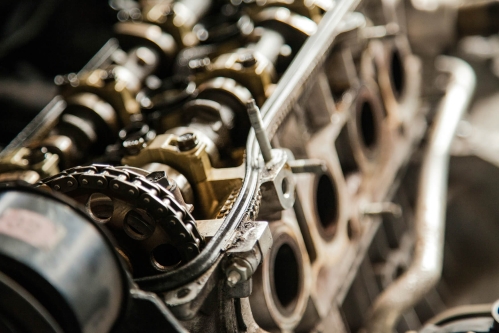
OEM vs Aftermarket Parts in 2025 — What’s the Best Choice for Your Car?
One of the most common questions drivers ask in 2025 is simple:
“Should I choose OEM or aftermarket parts for my car?”
With rising prices, global tariffs, and major supply chain shifts, choosing the right type of part now impacts not only performance — but also how much you spend on maintenance.
This guide breaks down the real differences between OEM and aftermarket parts, explains when each option makes sense, and shows how Spareza empowers drivers to choose the best solution for every repair.
1. What Are OEM Parts?
OEM (Original Equipment Manufacturer) parts are produced by the same brand that supplied the car’s factory components.
Pros of OEM parts:
-
Guaranteed fit and compatibility
-
Manufacturer-approved materials
-
Consistent quality across components
-
Ideal for vehicles still under warranty
Cons of OEM parts:
-
Higher price (often 2–4× aftermarket)
-
Limited availability due to dealer stock
-
Supply delays caused by global tariffs
-
Higher shipping and logistics costs
OEM is typically the “safe choice,” but not always the most cost-effective.
2. What Are Aftermarket Parts?
Aftermarket parts are produced by third-party manufacturers that engineer components compatible with OEM standards.
Pros of aftermarket parts:
-
40–70% cheaper than OEM
-
Wider selection of brands and price points
-
In some cases, better durability (HD lines for harsh climates)
-
Faster availability across global suppliers
-
Ideal for vehicles out of warranty
Cons of aftermarket parts:
-
Quality varies between manufacturers
-
Too-cheap parts can be unreliable
-
Requires selecting trusted brands
This is why Spareza curates only reputable aftermarket suppliers.
3. Is OEM better than aftermarket in 2025? The answer has changed.
Before 2020, OEM was considered the “gold standard.”
But in 2025:
1. Many aftermarket brands produce OEM components
Companies like Bosch, NGK, Denso, ATE, Mann, Mahle, Lemförder and others manufacture parts both for the aftermarket and for OEM assembly lines.
In other words:
OEM and aftermarket are sometimes the same part — just with different packaging and pricing.
2. Rising OEM prices push buyers toward aftermarket
Tariffs, raw material costs, and distribution markups increased OEM prices globally, especially in the US, Canada, UAE, and Africa.
3. Aftermarket engineering has improved dramatically
Reinforced bushings, upgraded HD suspension lines, and advanced filtration systems often outperform their OEM equivalents.
4. When OEM is the better choice
OEM is recommended when:
-
The vehicle is still under manufacturer warranty
-
You need high-precision electronics (ECUs, advanced sensors)
-
Your model requires coding / calibration (Mercedes, BMW, Audi)
-
You prefer brand-logo components
OEM also makes sense for rare, newly launched, or hybrid/EV models with complex electronic architecture.
5. When aftermarket is the better choice
Aftermarket is optimal for:
High-turn, high-wear components:
-
Engine air filters
-
Cabin filters
-
Oil filters
-
Brake pads and rotors
-
Suspension arms, bushings, and links
-
Wiper blades
-
Spark plugs
-
Cooling system parts (radiators, thermostats)
-
AC components (compressors, sensors)
Why choose aftermarket for these items?
-
High-quality aftermarket parts meet or exceed OEM specs
-
Huge cost savings over time
-
Faster availability and global supply
For climates like UAE or regions with rough roads in Africa, aftermarket HD parts last longer than standard OEM.
6. Cost Comparison: OEM vs Aftermarket in 2025 (Typical Examples)
| Part Type | OEM Price (avg.) | Aftermarket Price | Savings |
|---|---|---|---|
| Air Filter | $40–60 | $12–22 | ~65% |
| Brake Pads | $120–250 | $40–110 | ~55% |
| Cabin Filter | $35–50 | $15–25 | ~50% |
| Control Arm (BMW/Mercedes) | $250–400 | $90–180 | ~55% |
| Radiator | $300–600 | $120–280 | ~50% |
Across the top 50 parts categories, aftermarket delivers consistent 40–70% savings.
7. Why Spareza now offers both OEM and aftermarket
In 2025, Spareza expanded its catalog to serve every type of buyer.
Drivers choose Spareza because:
-
Both OEM and aftermarket options are available side by side
-
Transparent pricing across global suppliers
-
VIN-based compatibility checks reduce mistakes
-
Worldwide delivery makes sourcing easier
-
Only verified suppliers — no counterfeit risk
With two categories available, drivers can finally choose the option that fits:
budget, urgency, vehicle type, and driving environment.
8. How to choose between OEM and aftermarket (simple checklist)
Choose OEM if:
-
Your vehicle is under warranty
-
You need a rare or highly technical electronic part
-
You prefer brand certification
-
Your mechanic specifically recommends OEM
Choose Aftermarket if:
-
You want to save 40–70%
-
The part is a regular maintenance item
-
You drive in harsh climates (UAE heat, African roads)
-
You need fast availability
-
You want heavy-duty upgrades
9. Conclusion
In 2025, the best choice isn't OEM or aftermarket — it’s having access to both, depending on your needs.
With Spareza’s expanded catalog, drivers and workshops can compare options instantly, choose what fits their budget, and maintain their vehicles with confidence.
Save more, repair smarter — with global sourcing from Spareza.
Photo by Garett Mizunaka on Unsplash